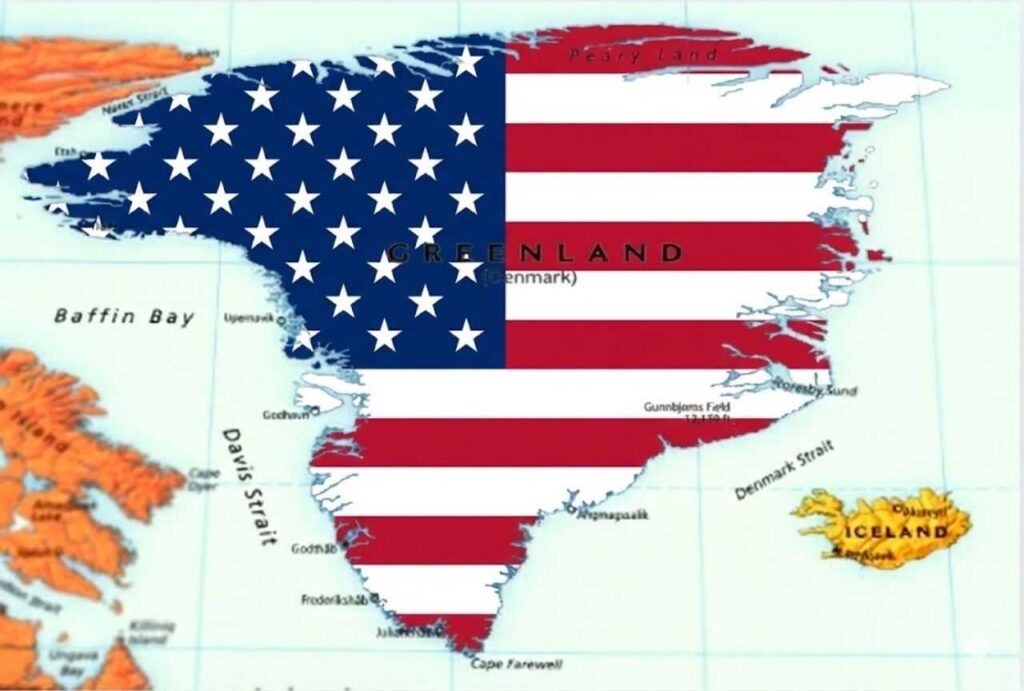
Prices are rising across the United States, household budgets are under pressure, and public frustration with inflation continues to grow. At the same time, a striking geopolitical idea has returned to the spotlight: the United States acquiring Greenland. What makes the moment controversial is not only the scale of the proposal, but the framing of the choices on the table. According to recent statements and reporting, the U.S. administration faces two paths, pursue a financial agreement to purchase Greenland or escalate toward a force-based outcome. Both options carry serious economic, political, and social consequences.
This debate raises a direct and uncomfortable question for Americans: how can the U.S. justify funding a massive territorial acquisition while struggling with high prices, record debt levels, and unresolved domestic challenges? Any attempt to buy Greenland would require tens of billions, and potentially far more when long-term infrastructure, defense, and governance costs are included. That burden would ultimately intersect with taxpayers, federal spending priorities, and inflation risks already weighing on the economy. (sources & references below)
I. What’s Happening Now? The Greenland Gambit
- Renewed U.S. Political Attention
Recent statements from senior U.S. leadership have revived public discussion around Greenland, framing its acquisition as a strategic priority rather than a symbolic idea. This shift has moved the topic from speculative commentary into active political debate.
- Two Explicit Paths Identified
The administration has publicly acknowledged two possible approaches: pursuing a negotiated financial agreement or applying pressure through force if strategic interests are blocked. This direct framing is unusual in modern U.S. territorial discourse and has raised domestic and international concern.
- Denmark and Greenland Push Back
Officials in Denmark and Greenland have reiterated that Greenland is not for sale and that sovereignty is non-negotiable. Greenland’s local government has emphasized self-determination, complicating any attempt at a lawful transaction.
- NATO and Ally Sensitivities
The discussion has drawn attention within NATO, as Greenland plays a role in transatlantic defense coordination. Any escalation, financial or military, risks straining alliances at a time when cohesion is already under pressure.
- Economic Timing Raises Scrutiny
The renewed push comes as the U.S. economy faces persistent inflation, high interest rates, and growing concern over federal debt. This timing has intensified criticism, with economists and voters questioning the fiscal logic of expanding commitments during domestic financial strain.
- Market and Policy Community Reaction
Policy analysts and investors are watching the situation closely. Talk of acquisition, expanded Arctic defense, or infrastructure commitments implies higher long-term federal spending, which feeds into broader concerns about budget sustainability.
- Public Response and Political Risk
Public reaction has been largely skeptical. With Americans facing rising costs for housing, food, and energy, the Greenland discussion has become a proxy for a larger debate about government priorities and accountability.

II. Greenland’s Strategic Value — More Than Ice
1. A Critical Geographic Position
Greenland’s location gives it outsized importance in global security planning. Situated between North America and Europe, it sits along key Arctic routes that are becoming more accessible as climate conditions shift. Control and access in this region affect early-warning systems, missile defense infrastructure, and transatlantic military coordination. From a strategic standpoint, Greenland strengthens the ability to project influence across the North Atlantic and the Arctic corridor.
For the United States, this geographic position reduces response times and enhances surveillance capacity. These advantages are often cited by defense planners as long-term assets rather than short-term gains, which helps explain why Greenland remains part of strategic discussions despite political resistance.
2. Economic Assets Beneath the Surface
Beyond defense, Greenland holds substantial economic potential. The island is believed to contain significant deposits of rare earth elements and other critical minerals used in advanced manufacturing, clean energy technologies, and defense systems. As global competition for supply chains intensifies, access to these resources carries economic and industrial importance.
However, resource potential does not equal immediate revenue. Extraction would require massive upfront investment, long development timelines, environmental oversight, and sustained public funding. These costs are often understated in political discussions but are central to any realistic economic assessment. For taxpayers, the question is not just what Greenland offers, but how long it would take before any financial return materializes.
3. Infrastructure, Subsidies, and Long-Term Costs
Greenland’s current infrastructure is limited, and its population depends heavily on public support. Any shift in sovereignty would likely place responsibility for transportation, healthcare, energy, and social services on the acquiring government. These obligations translate into ongoing expenditures rather than one-time costs.
From an economic perspective, this is where strategic value meets fiscal reality. While Greenland offers security advantages and future resource access, it also represents a long-term financial commitment. In an era of budget deficits and public concern over inflation, these continuing costs are becoming central to the debate rather than an afterthought.
III. The Price Tag Debate — Realistic vs Symbolic Costs
1. Cost Estimates: Range and Sources
- Wide Spectrum of Valuations
Current public debate has produced a broad range of potential cost estimates for a U.S. acquisition of Greenland. Analysts and think tanks have suggested figures anywhere from tens of billions to over a trillion dollars when strategic value and natural resources are included. - Mineral and Strategic Valuation Models
Economic models that incorporate strategic minerals and Arctic significance have placed Greenland’s value near $186 billion, while expanded frameworks assessing its geopolitical position suggest valuations that could reach into trillions of dollars. - Lower Bound based on Traditional Comparisons
Adjusted historic comparisons such as applying relative purchase metrics from the Louisiana or Virgin Islands deals, produce far smaller nominal figures, emphasizing that any simple price estimate fails to capture 21st-century realities. - Direct Per-Person Compensation Proposals
Internal discussions in Washington reportedly include proposals to offer payments ranging from $10,000 to $100,000 per Greenland resident as part of a potential agreement framework, which would by itself translate to billions of dollars in direct payments.
2. Core Elements Behind the Figures
Mineral Wealth and Long-Term Extraction Costs
Greenland is believed to contain significant deposits of rare earth elements, metals, and minerals critical to technology and defense supply chains. While these resources could boost value, unlocking them would require major infrastructure, extraction facilities, and sustained investment, adding to the overall effective cost rather than acting as an immediate financial offset.
Infrastructure and Public Services Obligations
Acquisition would entail responsibility for transportation, healthcare, housing, and energy infrastructure for Greenland’s population of roughly 57,000 people, in addition to supporting the island’s year-round economy. Government subsidies similar to those currently provided by Denmark would likely continue under U.S. administration, translating into ongoing fiscal commitments.
Defense and Arctic Operations
Enhanced Arctic defense presence means not only one-time construction spending but recurring operational costs. For example, specialized icebreakers and polar security assets can cost billions upfront and hundreds of millions annually to operate, expenses that compound the purchase price when considered in long-term budgeting.
3. Costs in Context With U.S. Domestic Spending
- Comparison to Federal Budget Priorities
Annual federal outlays in key categories, such as infrastructure, social programs, or debt interest, run into hundreds of billions or trillions of dollars. A Greenland acquisition at the higher end of estimates would represent a significant new financial commitment, competing for funding with domestic priorities during a period of inflation and economic pressure. - Debt and Borrowing Implications
If the U.S. were to finance an acquisition through debt instruments, the additional borrowing could increase the federal deficit and magnitude of debt service over time. Higher debt levels can influence interest rates and monetary policy decisions, feeding back into inflation dynamics that already affect households. - Public Perception and Political Pressure
Polling data suggests a majority of Americans oppose pursuing ownership of Greenland, reflecting concern about costs and priorities. This political skepticism reinforces the economic debate, as public consensus on spending direction influences legislative and executive decisions.
4. Symbolic vs Real Economic Burden
- Symbolic Price Tags
Narrative headlines often focus on striking figures such as trillions in mineral value or per capita compensation proposals, but these symbolic calculations do not translate directly into payable sums. They reflect potential resource worth under ideal conditions rather than negotiated cost responsibilities. - Real Financial Impact
The practical, realistic cost of acquiring and integrating Greenland would include one-time payments, transition funding, defense expansion, and ongoing public service obligations. These factors create a recurring fiscal footprint far beyond an initial headline price, making affordability and budget prioritization central to the debate.

IV. How Would the U.S. Actually Pay For It?
1. Federal Budget Reallocation
- Shifting Spending Priorities
To finance a large territorial acquisition, one primary mechanism would be reallocating existing federal funds. The U.S. federal budget exceeds $6 trillion annually, with major categories including Social Security, Medicare, defense, and discretionary spending. Altering established allocations would require legislative approval and face intense political resistance. - Discretionary vs Mandatory Spending
Because much of the federal budget is mandatory (such as entitlement programs) and not subject to annual adjustment, meaningful reallocation would likely come from discretionary spending, such as defense or infrastructure, areas already under pressure as lawmakers negotiate tight fiscal parameters. - Political Constraints
Any reallocation toward Greenland would compete with existing priorities, including defense expansion (recent proposals push the Pentagon budget toward $1.5 trillion for fiscal 2027), a shift that analysts warn would widen deficits without offsetting revenues.
2. Federal Debt and Borrowing
- Issuing Government Debt
The most direct financing method for large expenditures is debt issuance through Treasury securities. The U.S. national debt is already over $35 trillion and climbing, reflecting persistent annual deficits. New borrowing to cover a Greenland transaction would add to this total unless paired with explicit offsetting measures. - Interest and Fiscal Impact
Higher debt levels increase future interest obligations, which already represent a rising share of federal outlays. Additional borrowing for territorial acquisition would extend the period over which the government must allocate resources to interest payments rather than public services or investment. - Deficit Dynamics and Market Signals
Markets monitor deficit trends as a gauge of future fiscal stability. Additional substantial upward borrowing without clear revenue support could affect U.S. Treasury yields and investor confidence, influencing mortgage rates, corporate borrowing costs, and currency valuation.
3. Targeted Tax Measures
- New or Expanded Levies
To generate revenue, policymakers could propose taxes targeted at specific sectors, such as a carbon tax on high-emission industries. Projections suggest that a carbon tax of $40 per ton of CO₂ could yield $100–$150 billion annually, which could be designated for special funding needs. - Public Acceptance and Implementation
Targeted taxes can be politically contentious, especially during periods of inflationary pressure on consumers and businesses. Successful implementation would require broad legislative support and public buy-in, which is challenging amid economic stress.
4. Public-Private Investment Structures
- Incentive-Driven Partnerships
One strategy to lessen direct government burden is through public-private partnerships (PPPs). In this approach, private investors would assume part of the upfront cost in exchange for long-term revenue rights, such as mining royalties or infrastructure usage fees. - Risk and Return Dynamics
While PPPs can mobilize private capital, they also introduce elements of market risk and require credible return prospects for investors, which may be uncertain given Greenland’s developmental needs and global commodity price volatility.
5. Resource-Backed Financing
- Collateralizing Natural Resources
Greenland’s deposits of rare earth elements and minerals could serve as collateral for loan structures or long-term bonds issued by the U.S. Treasury or development financiers. Such financing models tie repayment capacity to extraction revenue streams. - Timeline and Market Conditions
The effectiveness of resource-backed financing depends on stable market prices and reliable extraction timelines. Given Greenland’s current economic scale and development status, resource extraction revenue would not generate immediate cash flow and could delay financing benefits well beyond initial acquisition costs.
6. Federal Transfers and Integration Costs
- Extending Existing Support Models
If Greenland were integrated under U.S. governance, federal transfers for healthcare, infrastructure, and social services would likely expand. Current levels of federal support in U.S. states often exceed billions annually, suggesting that integration costs alone could parallel significant segments of current federal budgets. - Long-Term Fiscal Commitment
Even without an upfront acquisition price, the fiscal obligation to provide services would create ongoing budget commitments. This has fiscal implications similar to entitlements, where recurring costs extend well beyond the initial transaction.
7. Budgetary Trade-offs and Fiscal Policy Realities
- Competing Priorities
Budget debates in Congress increasingly focus on deficit reduction, entitlement sustainability, and national priorities such as infrastructure and healthcare. Funding a Greenland acquisition would require negotiators to balance these longstanding pressures against a new strategic initiative. - Emerging Fiscal Reforms
Discussions over structural changes, including proposals like a balanced budget amendment, reflect broader tension between spending commitments and fiscal discipline. Such reforms could constrain future borrowing but may also limit flexibility in financing strategic expenditures. - Public Finance Shifts
Policymakers also increasingly consider tools like green budgeting, which integrates environmental costs into fiscal frameworks. While not directly tied to territorial acquisition financing, this highlights evolving expectations around how the government allocates capital across competing demands.
The question of Greenland is no longer limited to diplomacy or defense strategy. It has become a test of economic judgment, public trust, and national priorities. Any path forward, whether through negotiation or escalation would carry costs that extend far beyond a single transaction, shaping federal spending, debt dynamics, and public confidence for decades.
At a time when many Americans are struggling with rising prices and unresolved domestic pressures, the idea of financing a historic acquisition forces a difficult comparison between global ambition and internal stability. The numbers are large, the risks are real, and the trade-offs are unavoidable.
What remains uncertain is not whether the United States has the financial capacity to pursue such a move, but whether it has the political will and public support to justify it. As this debate continues, the outcome may say less about Greenland itself and more about how America defines affordability, power, and responsibility in a changing world.
Sources & References
- What Would It Cost to Buy Greenland?
https://www.britannica.com/money/What-would-it-cost-to-buy-Greenland - Trump Advisers Discuss Options for Acquiring Greenland (Reuters)
https://www.reuters.com/world/trump-advisers-discussing-options-acquiring-greenland-us-military-is-always-an-option-2026-01-06/ - Trump Administration Mulls Payments to Sway Greenlanders (Reuters)
https://www.reuters.com/world/europe/trump-administration-mulls-payments-sway-greenlanders-join-us-2026-01-08/ - How Much Greenland Would Have Cost the U.S.: Estimates and Realities
https://breaking-news.com.ua/en/news/world-en/how-much-greenland-would-have-cost-the-us-estimates-and-realities/ - Trump Puts a Shocking Price Tag on Greenland (Economic Times)
https://economictimes.indiatimes.com/news/international/us/trump-puts-a-shocking-price-tag-on-greenland-heres-how-much-the-massive-island-is-worth/articleshow/126414215.cms - How Much Would It Cost the U.S. to Buy Greenland?
https://www.thepricer.org/how-much-would-it-cost-the-u-s-to-buy-greenland/ - Proposed United States Acquisition of Greenland
https://en.wikipedia.org/wiki/Proposed_United_States_acquisition_of_Greenland - Expenditures in the United States Federal Budget
https://en.wikipedia.org/wiki/Expenditures_in_the_United_States_federal_budget - Moody’s: $1.5 Trillion Defense Budget Could Widen Deficits (Reuters)
https://www.reuters.com/world/us/moodys-analyst-says-15-trillion-trump-defense-budget-plan-could-widen-deficits-2026-01-08/ - If Greenland Joined the U.S., It Would Be the Most Aid-Dependent State (Moneycontrol)
https://www.moneycontrol.com/news/business/economy/if-greenland-joins-the-us-it-will-be-the-smallest-most-aid-dependent-state-13765813.html - Trump’s Greenland Gambit: How Much Would It Cost to Buy It? (Times of India)
https://timesofindia.indiatimes.com/world/us/trumps-greenland-gambit-how-much-would-it-cost-to-buy-it/articleshow/117057598.cms - American Expansionism Under Donald Trump
https://en.wikipedia.org/wiki/American_expansionism_under_Donald_Trump - Balanced Budget Amendment
https://en.wikipedia.org/wiki/Balanced_budget_amendment - Green Budgeting and Public Finance (OECD)
https://www.oecd.org/en/topics/green-budgeting.html