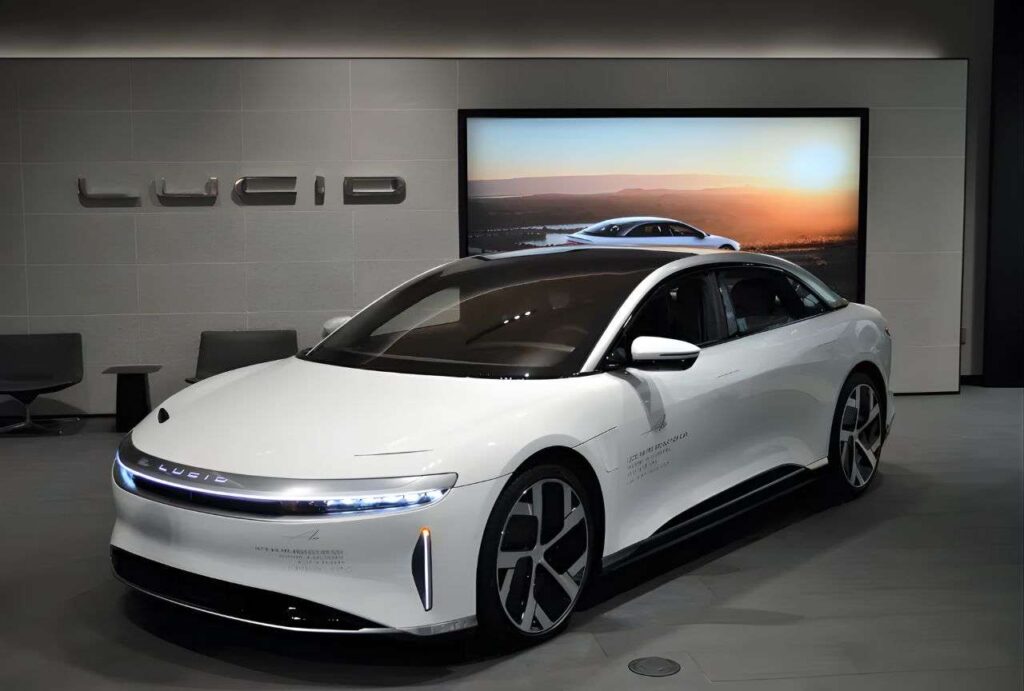
2026 started aggressively with layoffs, and the EV industry, which in recent times was defined by aggressive hiring, rapid expansion, and bold growth projections. Now, it is confronting a different reality. Lucid Motors layoffs have officially entered the conversation, signaling that even premium EV manufacturers are not insulated from the broader cost-cutting wave reshaping global industries.
Lucid Motors recently announced significant workforce reductions, cutting approximately 12% of its employees as part of a restructuring effort aimed at improving operational efficiency and accelerating its path to profitability. The move places Lucid alongside a growing list of automotive and technology companies tightening budgets in response to slower EV demand, high capital expenditures, and intensifying investor pressure.
What Happened at Lucid Motors?
The Lucid Motors layoffs are not a one-time correction. They are part of a pattern that now defines the company’s recent history.
In 2023, Lucid Motors cut roughly 18% of its workforce, eliminating around 1,300 jobs. In 2024, another 6% reduction followed, impacting about 400 employees. Now in 2026, the company has announced a further 12% workforce cut, affecting an estimated 750 to 800 workers.
Three rounds of layoffs in three years tell a clear story. This is not a temporary adjustment. It signals sustained pressure inside one of the most closely watched electric vehicle manufacturers in the market.
Lucid continues to increase deliveries and report revenue growth, yet recurring restructuring has become part of its operating model. The latest job cuts arrive at a time when the broader EV sector is facing slower demand growth, tighter capital conditions, and rising expectations for profitability.
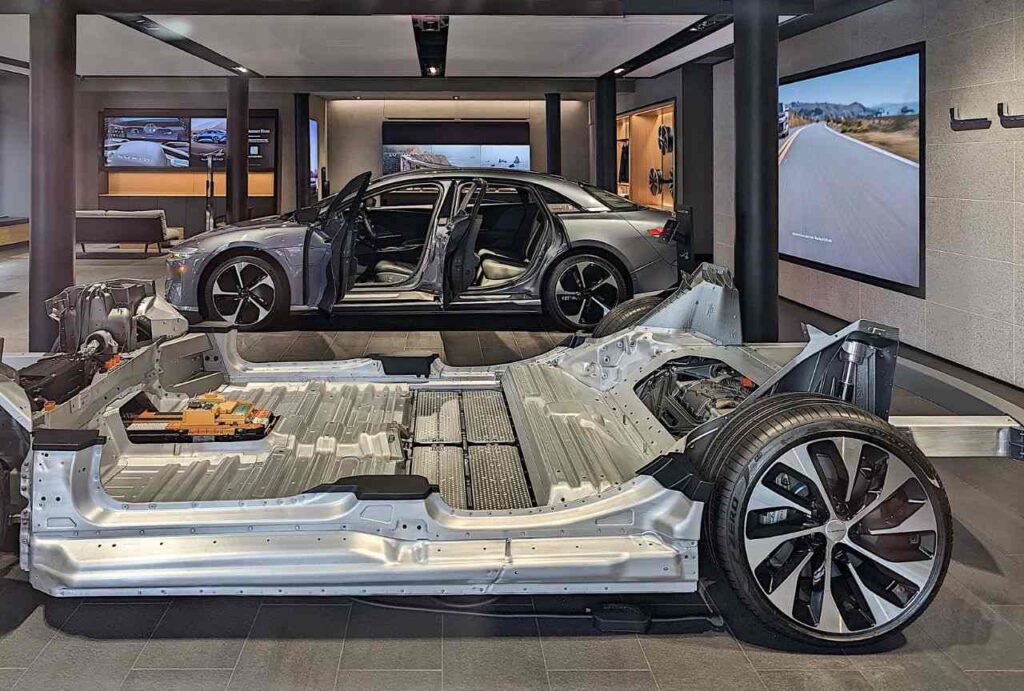
1. Workforce Reduction: Scope and Focus
- Layoff announcement: Lucid Motors confirmed it is reducing its workforce by 12%, affecting hundreds of full-time employees as part of a broader cost-cutting and profitability strategy.
- Who is impacted: The cuts are concentrated on salaried and corporate roles, including support functions, engineering, and managerial personnel. Hourly manufacturing, logistics, and quality assurance workers at its Arizona production facility are not included in the layoffs.
- Global footprint: With about 6,800 full-time employees reported at the end of 2024, the layoffs likely represent 750–800 hundred positions being eliminated from Lucid’s workforce.
2. Reasoning Behind the Lucid Layoffs
- Profitability push: Interim CEO Marc Winterhoff emphasized that the reductions are intended to improve operational efficiency and strengthen the path to profitability amid ongoing financial losses.
- Cost savings: Lucid’s CFO stated that the workforce cuts are projected to save around $500 million over the next three years, helping the company allocate capital to strategic priorities like product development and margin improvement.
- Strategic focus: Despite the layoffs, Lucid leadership stressed that its long-term strategy remains intact, including product launches and growth initiatives such as a midsize EV platform and autonomous vehicle projects (robotaxi partnerships).
3. Financial Performance Context
- Revenue growth vs. losses: Lucid reported record deliveries and strong revenue growth in 2025, with approximately 15,841 vehicles delivered, up roughly 55% year-over-year — and annual revenue of about $1.35 billion.
- Ongoing losses: Despite higher revenue, the company continued to incur significant net losses in both the fourth quarter and full year of 2025, with a diluted net loss per share of $(3.62) in Q4 and $(12.09) for the full year.
- Production guidance: Lucid issued guidance for 25,000–27,000 vehicles in 2026, signaling production expansion despite challenges that influenced the decision to reduce headcount.
4. Operational and Market Challenges
- Supply constraints: Ongoing supply-chain issues and external production pressures, such as tariffs and material shortages, contributed to a larger-than-expected loss and partially influenced workforce restructuring.
- Demand pressure: The EV market has cooled in some segments following the expiration of generous tax incentives in the U.S., which has affected demand for high-end electric vehicles and pressured companies like Lucid to tighten spending.
- Leadership transition: Lucid has been operating without a permanent chief executive, with Winterhoff serving as interim CEO, adding another layer of operational adjustment as the company aligns costs and strategy.
5. Severance, Benefits, and Transition Support
Lucid’s internal communication to employees included details on support for those impacted by the layoffs:
- Severance packages: Affected employees are receiving structured severance payments.
- Bonus payouts: Pro-rated bonus compensation was also included to help during the transition.
- Health coverage continuation: The company stated it will provide continued health benefits for a defined period.
- Career transition assistance: Additional support, including outplacement services or job search assistance, was offered to help employees find new opportunities.
How Lucid’s Layoffs Add to EV & Auto Industry Job Cuts
The Lucid 12% workforce reduction is not an isolated event, it fits into a broader trend of layoffs across electric vehicle and automotive companies responding to slowing demand, regulatory changes, and cost pressures. Below are the most significant recent layoffs in the EV and motors industry:
Major EV Sector Layoffs
- Lucid Motors – 12% workforce cut (≈750–800 jobs)
The luxury EV maker reduced its salaried workforce as part of a cost-control and profitability strategy. Layoffs excluded hourly production roles. - General Motors – Thousands of layoffs across EV operations (≈5,500 jobs)
GM announced job reductions at its electric vehicle and battery facilities, including furloughs and layoffs tied to slower EV demand and regulatory shifts impacting production. - General Motors – ~1,700 additional layoffs tied to EV demand slowdown
GM adjusted staffing at manufacturing facilities focused on electric vehicles and battery production in Michigan and Ohio. - Rivian – Over 600 layoffs (~4–4.5% of workforce)
Rivian Automotive cut more than 600 positions as EV incentives expired and EV demand softened, with reductions across marketing, sales, and operations teams. - Rivian – Smaller additional layoffs (~1.5% of workforce)
Earlier in 2025, Rivian made another staffing reduction prior to its R2 model launch to conserve capital and adjust to market conditions.
Automotive Industry Moves Impacting EV Jobs
- Ford – Up to 1,000 EV-related jobs cut at Cologne plant (Europe)
Ford announced workforce reductions in its German EV assembly plant due to weak EV demand, contributing to broader European auto layoffs. - Battery & Component OEM Layoffs – Ultium Cells facility (~1,300 workers)
At General Motors’ Ultium Cells battery plant in Warren, Ohio, more than 1,300 employees faced layoffs tied to slower near-term EV adoption, impacting battery assembly and quality operations.
The recent restructuring at Lucid Motors reflects more than a corporate workforce decision, it signals a phase of transition inside the electric vehicle industry itself. The recurring layoffs across 2023, 2024, and 2026 suggest that the company is still searching for the optimal balance between expansion, cost efficiency, and long-term technological investment.
What happens next remains uncertain. The EV market is moving into a period where growth is no longer measured only by production scale but also by financial sustainability. Companies that entered the electric mobility race during the rapid expansion years are now facing tighter investor expectations and stronger competition from established automakers and emerging EV startups.
Lucid has not indicated that restructuring is finished. Market conditions, consumer demand shifts, and capital pressures may continue influencing employment decisions across the organization. At the same time, the company still maintains development plans for new vehicle platforms and technology programs, meaning operational adjustments may continue rather than stop abruptly.